I remember coming home from school to absolutely nothing in the fridge. Nothing in the cupboards.
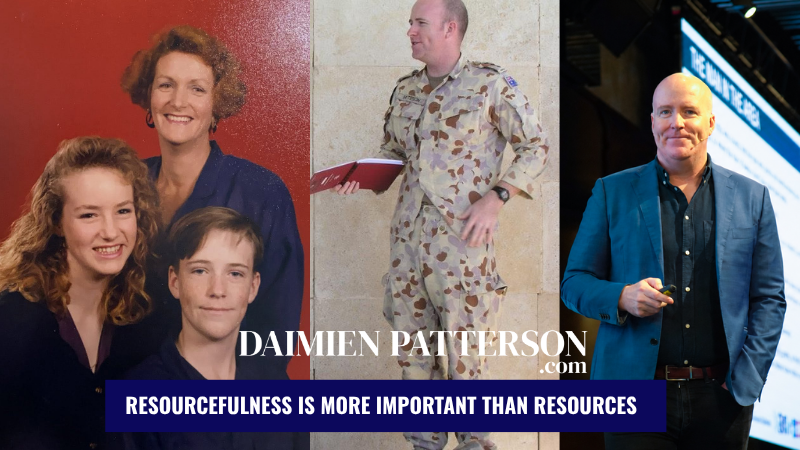
After my parents divorced in Western Sydney, my mother went from being a traditional stay-at-home wife to single-handedly raising four kids. She worked full-time and studied part-time to become a medical scientist just to keep us fed. Dinner on many nights was just pancakes or French toast because that was all she could muster.
Standing at the supermarket checkout, I would watch her track prices with a notepad and a pen. Watching her have to put items back on the shelf because we were a few dollars short embarrassed me deeply as a teenage boy.
But looking back, it was the greatest financial gift I ever received.
It handed me an unshakeable sense of drive and determination. I made a promise to myself back then: I never want to be in this situation again. Often, the most financially successful people come from absolutely nothing. In some ways, it is a curse to be born into a family where everything is given to you, because you are robbed of the gift of raw drive.

The Reality Check That Changed My Life
Despite that underlying drive, I didn’t start as a model citizen. In my early teens, I was going off the rails. I was drifting into petty juvenile offences, and it was clear I needed a heavy dose of structure to put me on the straight and narrow.
That structure found me when I joined the local Army Cadets in Campbelltown, run by a veteran named John Weir. He was a good man who simply wanted to give back to kids. One afternoon, he pulled me aside and asked a simple question:
“Daimien, why do you play up so much?”
Before I could answer, he gave me the reality check that permanently altered my trajectory:
“Because you’re smart. But you think you’re smarter than the system, and you’re not. The system has dealt with many people just like you.”
He didn’t offer me motivational hype or corporate platitudes. He laid down a strict operational framework. He told me that if I respected my mother, kept my room clean, and followed orders, he would teach me everything I needed to know and ensure I was promoted. To a kid whose father wasn’t around as much as he’d like, that structure was music to my ears.
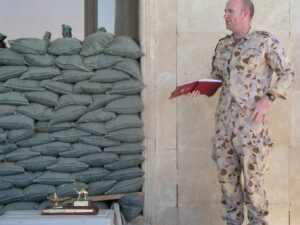
I submitted to that system. By 18, I was the top cadet in New South Wales and earned direct entry into Duntroon, eventually leading regular army soldiers as a military officer.
When the Legacy System Bottlenecks Your Growth
Years later, after leaving the regular army, I decided to volunteer my time to help the youth cadet system that had saved me. But I quickly realised the official organisation had become completely bogged down by over-bureaucratisation.
They had banned campfires because one kid fell into a fire once. They weren’t allowed to do parachuting or shoot at man-shaped targets. Worse, when I offered my 14 years of real-world military officer experience to help, the bureaucratic gatekeepers told me I had to go back to the absolute beginning and climb a 20-year promotional ladder just to introduce basic operational updates.
Legacy systems do this to high performers constantly. They enforce rigid, slow processes that suffocate talent and halt execution.
I didn’t have 20 years to waste on a broken machine. So, I bypassed them entirely.
I launched an independent, rival military cadet association run strictly by ex-military personnel. We brought back campfires; we just gave a strict safety briefing at the start of every camp so no one got hurt. We did tandem parachute jumps with the kids.
Within three years, our independent model scaled from a blank piece of paper to seven thriving units, over 70 ex-military instructors, and 400 active youth across Queensland—all with zero government funding.
Resourcefulness Over Capital
Eventually, the Commander of the official Australian Army Cadets called me directly. He asked me the golden question: “How the hell are you doing this with no resources?”
I told him: “I’m doing it the way the army trained me to do it, Sir. I’m being resourceful.”
I didn’t have a massive state budget, so I adapted:
- I mapped out a clear plan, an unshakeable vision, and a fixed mission.
- I recruited ex-military instructors who didn’t want money—they wanted to fulfil a mission and help kids.
- I negotiated a discount rate with a local army disposal store to provide the uniform kits.
- I secured sponsors from local RSL clubs and community grant funding.
In business, founders and CEOs constantly tell me they can’t scale because they lack capital, staff, or perfect market conditions. But the truth is, capital is replaceable. Resourcefulness is a permanent competitive advantage. Our independent model was executing so flawlessly that it put the entire federal system on notice, forcing them to implement massive internal reforms to catch up with us.
Does Your Business Run on Chaos or Architecture?
You cannot out-smart foundational structure. Whether you are leading an army platoon, a youth non-profit, or a multi-million dollar enterprise, success requires a structured operational system that removes daily chaos and forces clear accountability.
If your business currently requires your constant 80-hour-a-week adrenaline to survive, you haven’t built a scalable company—you’ve just built a highly stressful job for yourself.
Stop trying to fight a broken, chaotic internal system. Step up, map out your tactical architecture, and build a team that executes flawlessly even when you aren’t in the building.
Ready to transition from daily firefighting to true operational scale? * 📈 Audit Your Systems: Discover how I spend a full, focused day inside your business to eliminate growth bottlenecks and build high-performing teams.
📕 Get the Blueprint: Download a free copy of the Real Leadership Book right now to master the systems of battle-tested authority: Download Your Free Handbook Here.