When Is It Time to Make the Move?
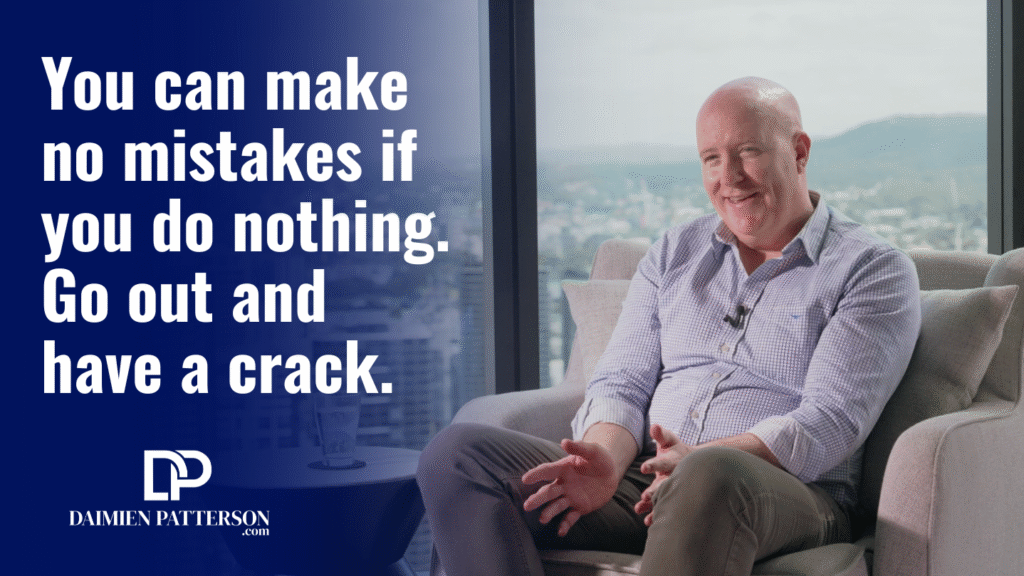
There comes a point in most careers when you have to make a decision. Are you going to stay on the path you’re on for the long haul, or are you going to change direction and have a crack at something else?
For me, that decision came towards the end of my Army career. I had been serving for about 14 years and had reached the level of Battery Commander. I loved the Army then and I still do. It is a great institution, I owe a lot to it, and I certainly don’t begrudge anyone who chooses to make a lifelong career in the Defence Force. We need good people to stay and provide the leadership those organisations need.
But I also knew I didn’t want to spend the rest of my working life in the Army.
The difficulty was deciding when to leave.
If you are going to change careers, particularly after spending a significant amount of time in one profession, there is a practical reality you have to consider. Establishing yourself somewhere else takes time. You have to learn a new industry, build experience, develop relationships and establish a reputation. The longer you wait, the less time you have to do that.
There were personal considerations as well. By then I had two young children. My father had been in the Army, and I remembered him not being around as much as either of us would have liked when I was growing up. I had already given a good chunk of my life to the Army, having joined in 1996, and I started thinking that my responsibility now lay more with my family.
So I made the decision to leave at the end of a command appointment. I wanted to finish on a high and quit while I was ahead rather than hang around simply because staying was familiar.
Looking back, that decision taught me something that has become just as relevant in business as it was in my military career: there are times when good leadership is about persevering, and there are times when you need to recognise that it is time to make a move.
You Can’t Remove Every Risk From the Decision
One of the things we say in risk management is that you can manage any risk by simply not doing the activity. If you don’t do something, there is no chance of that particular activity going wrong.
Of course, there is also no chance of it going right.
That distinction matters for business owners because so much of business involves making decisions without knowing exactly how they are going to turn out. You can do your research, understand the risks, look at the numbers and prepare as well as possible, but eventually you still have to make a decision.
Starting a business involves risk. Employing somebody involves risk. Investing money involves risk. Expanding into another market involves risk. Changing the way your company operates involves risk. Delegating responsibility to somebody else involves risk as well.
The temptation is to believe that doing nothing is somehow the neutral position, but it isn’t. Doing nothing is still a decision, and that decision has consequences of its own.
When I left the Army, I didn’t know exactly where that decision would lead. What I did know was that I had other goals I wanted to pursue. I had already been investing in property while serving, and I had done well enough with it to see that there might be an opportunity to build the next stage of my career around something I was genuinely interested in.
Rather than completely close the door on the military, I transferred to the Reserves and kept a foot in that world while I moved into property investment. My first step was working for a property investment company that I had previously been a client of.
That move would teach me another lesson I wasn’t expecting.
The Standards You Take for Granted
When you have spent a long time in the military, you become accustomed to operating around people who have been through a significant filtering and training process. There are standards and values you tend to assume other people share because they have been normal throughout your working life.
When I entered the civilian business world, I realised fairly quickly that I couldn’t necessarily take those things for granted.
The company I joined operated in a way that didn’t sit comfortably with me. From my perspective, the focus wasn’t genuinely on helping people become successful property investors. It was on selling as many investment properties as possible.
That created another decision.
I could stay there because I had made the move out of the Army and needed somewhere to establish my second career, or I could decide that if I wanted to operate according to different values, I needed to take responsibility for creating that environment myself.
So I left and started Integrity Property.
Again, there was no guarantee that decision would work. Starting a business rarely comes with one. But that is the point. If you spend your life waiting for an opportunity where there is no possibility of failure, you may spend a very long time waiting.
Having a Crack Doesn’t Mean Getting Everything Right
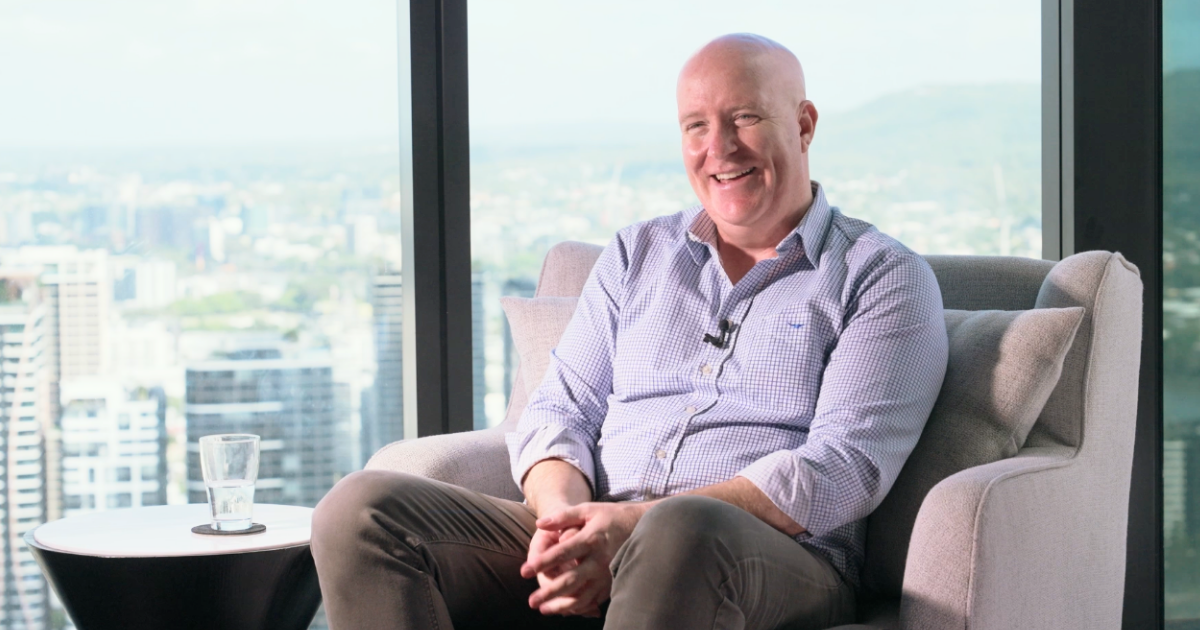
When Jeff Hughes asked me during our conversation how I would like to be remembered, my answer wasn’t that I wanted people to think I had done everything perfectly. That would be ridiculous.
I’ve made plenty of mistakes. I’ve let people down. I’ve had things work and things not work. But I’ve also had the opportunity to serve in two wars, start businesses, build a not-for-profit community organisation, run a boot camp for kids and help a lot of people along the way.
I’d rather be remembered as someone who had a crack and tried to live a full life.
There is a business lesson in that because one of the realities of being an owner is that you are going to get things wrong. You are making decisions about people, money, customers, opportunities and strategy, often without having all the information you would ideally like to have.
The only way to guarantee you make no mistakes is to do nothing.
That doesn’t mean being reckless. Having a crack is not the same as blindly charging into every opportunity that comes across your desk. You still need to understand the risks, do your homework and make the best decision you can with the information available.
What it does mean is accepting that failure is one possible outcome of action. You might try something and end up back where you started. On the other hand, you might succeed beyond what you expected, create opportunities for other people and build something that would never have existed if you had chosen to stay where you were comfortable.
You don’t get to know which outcome you’re going to have before you start.
What Are You Holding Onto Because It Is Familiar?
Business owners face their own version of this decision all the time.
It might not involve leaving a 14-year military career, but there are usually things inside a business that an owner knows need to change. Perhaps the business has outgrown the systems that worked when it was smaller. Perhaps you know you need another person in the team but have been reluctant to hand over responsibility. Maybe you have an opportunity you keep postponing because there are too many unknowns, or you’re continuing to do work yourself because changing the way the business operates feels more difficult than carrying on as you are.
Sometimes continuing is absolutely the right decision. There is a lot to be said for persistence, particularly when business gets difficult.
But persistence and inertia are not the same thing.
There is a difference between deliberately staying the course because you still believe it is the right course, and staying where you are simply because changing direction carries uncertainty.
That is why I think business owners need to consider both sides of risk. We naturally ask ourselves what could go wrong if we make the change. It is equally important to ask what happens if we don’t.
What does another year of operating the same way cost you? What opportunities might you miss? What happens if the business continues to depend too heavily on you? What happens if the person, system or situation you already know isn’t working is still there twelve months from now?
Those questions don’t automatically mean you should change direction. They simply give you a more complete picture of the decision you’re actually making.
At Some Point, You Have to Pick Your Moment
I left the Army because I reached a point where the reasons to move into the next stage of my life outweighed the reasons to stay. I had young children, I had already served for 14 years, I had other goals I wanted to pursue, and I knew that establishing another career would take time.
So I picked my moment.
That decision eventually took me into property investment and entrepreneurship, but it also exposed me to a completely different world from the one I had known in the military. Some of those experiences were positive and some taught me lessons the hard way. Either way, none of them would have happened if I had decided that avoiding mistakes was more important than taking action.
As a business owner, there will always be another reason to wait. You can always do another spreadsheet, have another meeting, or spend another month thinking about the risks. Sometimes that extra work is necessary. Sometimes it is simply delaying a decision you already know you need to make.
You don’t need to know that everything will work.
You do need to decide whether the opportunity is worth having a crack at.
Because you can make no mistakes if you do nothing. But you probably won’t build much either.
Watch my full conversation here to hear more about why I left the Army, what happened when I entered the civilian business world and the experiences that eventually led me to start my own company.